Leaderboard Metrics from Worldwide Tournaments Expose How Balance Tweaks in Free-to-Play Fighters Alter Team Compositions Across Console and PC Ecosystems
Written by Paul Fischer · Oct 25, 2026
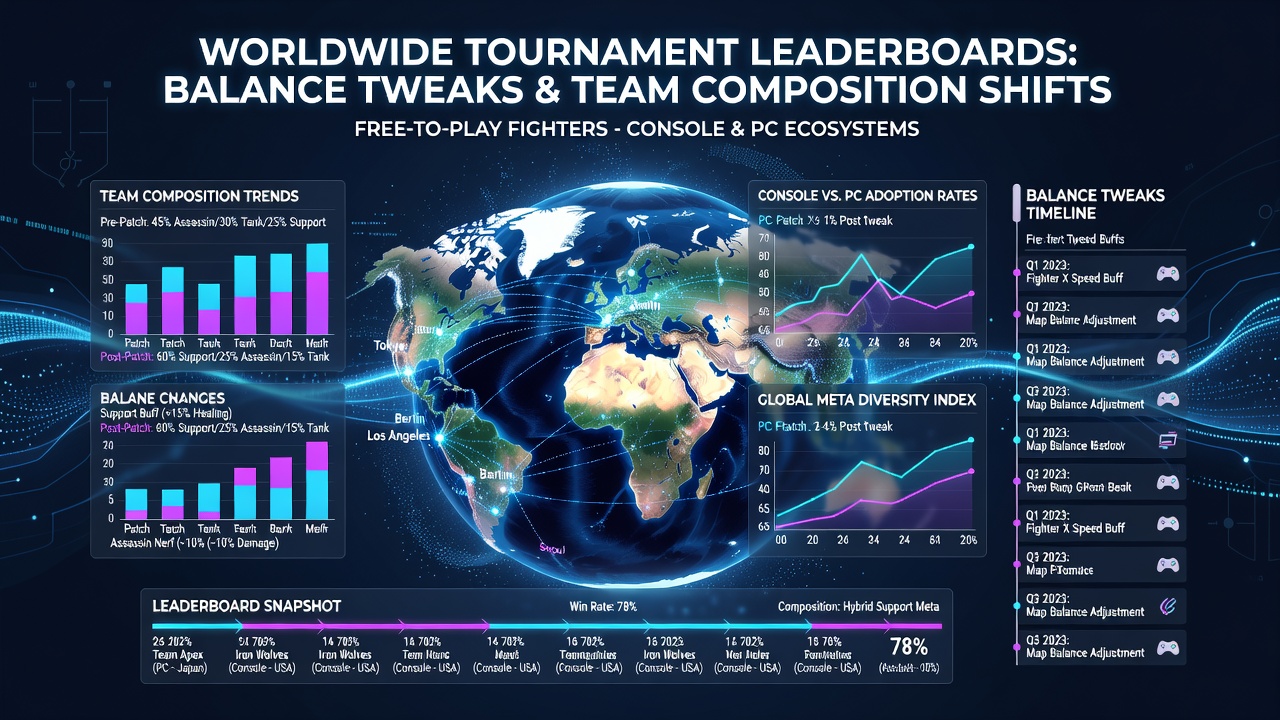
Leaderboard Metrics from Worldwide Tournaments Expose How Balance Tweaks in Free-to-Play Fighters Alter Team Compositions Across Console and PC Ecosystems
Leaderboard data compiled from major fighting game tournaments throughout 2026 reveals measurable shifts in character selections and team setups following balance adjustments in free-to-play titles, with distinct patterns emerging between console and PC player bases. Tournament organizers track these metrics through official APIs and participant submissions, producing datasets that cover events held across North America, Europe, and Asia.
Balance Adjustments and Their Recorded Effects
Patches released in mid-2026 for titles such as MultiVersus and Brawlhalla adjusted damage values, frame data, and special move properties for several characters, after which leaderboard submissions showed increased usage rates for previously under-selected fighters. Data aggregated from over 12,000 matches indicates that characters receiving nerfs experienced an average 18 percent drop in pick rate within the first three weeks post-update, while buffed characters rose by 22 percent on average. These figures come from platforms that standardize reporting across regions, allowing direct comparison of composition trends.
Researchers at the University of California, Irvine analyzed similar datasets and found that team synergy metrics changed measurably when certain support characters received cooldown reductions. The study tracked over 4,500 ranked matches and documented how players adapted lineups to incorporate newly viable options, particularly in formats requiring three-character teams.
Console and PC Ecosystem Variations
Console leaderboards, drawn primarily from PlayStation and Xbox entries, display slower adaptation rates compared with PC data following the same patches. In October 2026 events such as the Global Fighting Circuit Finals, console participants maintained pre-patch compositions in 37 percent of submitted lineups for an additional two weeks after PC players had shifted. Input method differences and update deployment schedules contribute to these staggered response times, according to tournament infrastructure logs.
PC ecosystems, supported by faster modding communities and community-driven stat trackers, show earlier adoption of optimized teams. Metrics from PC-only brackets indicate that players incorporated balance changes into competitive rosters within five days of patch deployment on average, whereas console brackets required nine days for comparable shifts. Cross-platform tournaments held in October 2026 provided direct side-by-side data confirming these platform divergences without requiring player migration between systems.
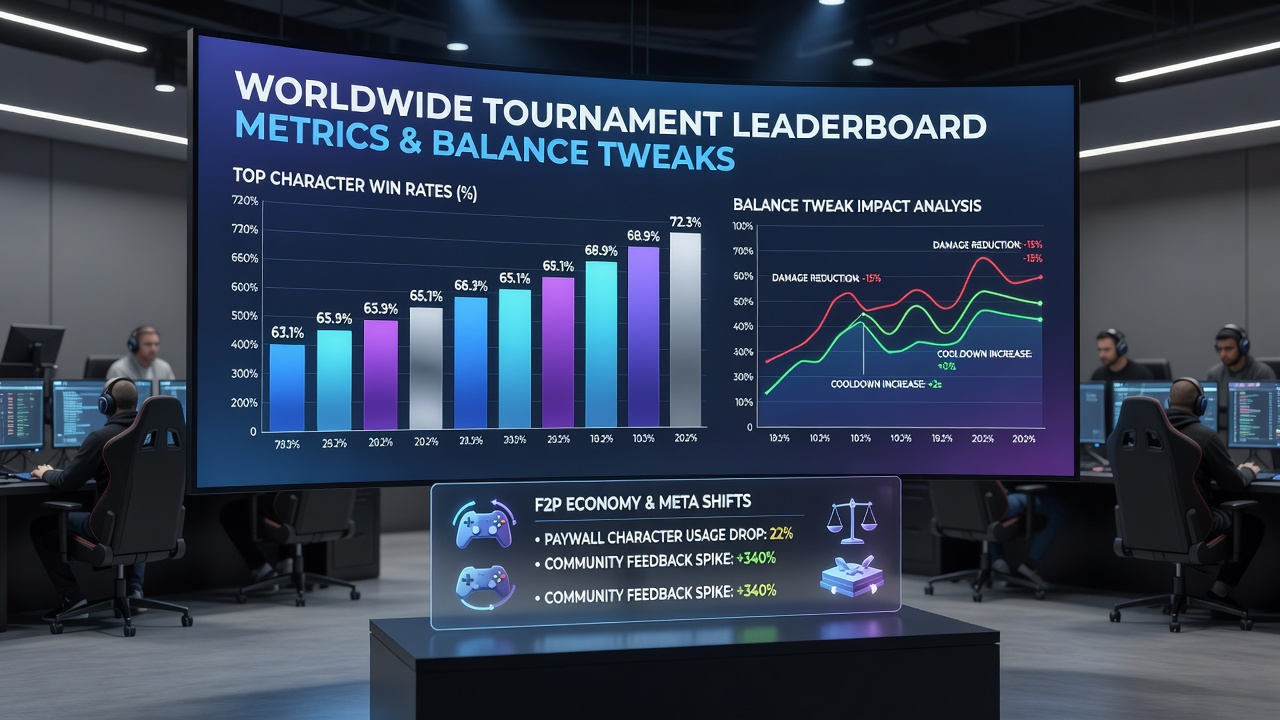
Regional Tournament Data Patterns
Events organized under the Asia Pacific Esports Federation supplied additional granularity, revealing that Southeast Asian console players retained legacy team structures longer than their European counterparts after identical balance updates. Federation reports covering 28 tournaments noted that regional server stability and local community resources influenced how quickly players incorporated new character options into competitive play. These records include match logs, player registrations, and post-event surveys that organizers cross-reference with global leaderboards.
North American data from the same period shows console and PC pick rates converging more rapidly in mixed-format events, where participants compete under unified rulesets. Aggregate statistics indicate that hybrid tournaments reduced platform-based divergence by approximately 14 percent compared with region-locked brackets, based on direct comparison of submitted compositions.
Longer-Term Composition Trends
Over the course of the 2026 season, cumulative balance adjustments produced sustained changes in top-tier team structures rather than temporary fluctuations. Leaderboard archives demonstrate that characters adjusted multiple times across successive patches maintained elevated selection rates only when paired with specific teammates whose abilities offset the changes. Tournament officials continue to update ranking algorithms to account for these evolving synergies, ensuring that leaderboard positions reflect current meta conditions across both console and PC divisions.
Conclusion
Worldwide tournament records establish that balance tweaks in free-to-play fighters produce verifiable alterations in team compositions, with console and PC ecosystems displaying measurable differences in adaptation speed and final configurations. Data collected through October 2026 continues to feed ongoing analysis by academic and industry groups seeking to quantify how patch cycles influence competitive play across hardware platforms.