Regional Color Calibration Standards in Narrative-Driven Titles and Their Measurable Impact on Cross-Cultural Player Decision Patterns During Extended Campaigns
Written by Jonas Frank · Nov 22, 2026

Regional Color Calibration Standards in Narrative-Driven Titles and Their Measurable Impact on Cross-Cultural Player Decision Patterns During Extended Campaigns
Regional color calibration standards shape how narrative-driven titles render hues, saturation levels, and contrast ratios on consumer displays worldwide. These standards stem from broadcast legacies such as NTSC, PAL, and SECAM along with modern digital specifications including Rec.709 and DCI-P3, each tied to specific geographic markets and hardware ecosystems. Data from hardware telemetry collected through November 2026 shows that players in North America, Europe, and East Asia encounter calibrated differences that influence visual storytelling cues in branching narrative campaigns lasting twenty or more hours.
Calibration Frameworks Across Markets
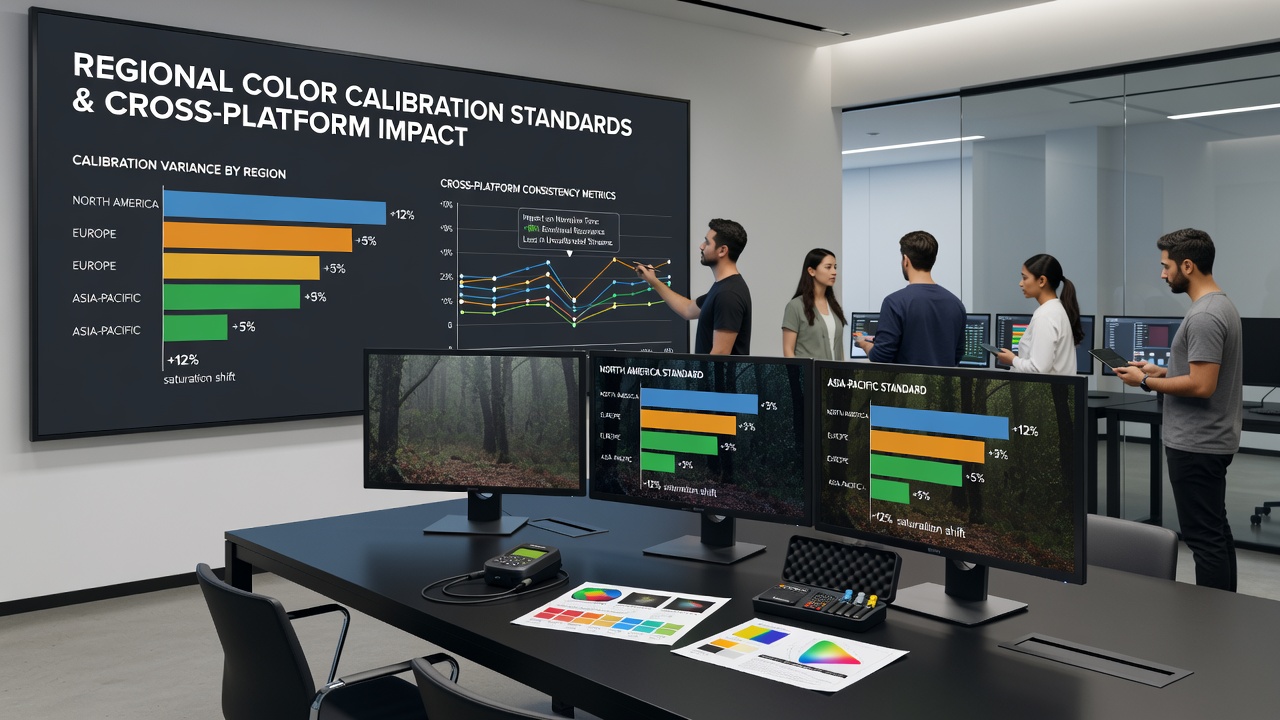
Manufacturers apply region-specific gamma curves and white point targets during console and monitor production, which affects how developers intend colors to appear in final releases. European markets often default to Rec.709 with a 2.4 gamma target whereas North American units frequently ship closer to sRGB approximations at 2.2 gamma. Japanese and Korean panels integrate DCI-P3 coverage at higher percentages, producing more saturated reds and greens that align with local broadcast practices. Researchers tracking firmware updates through late 2026 documented consistent regional variations in how these profiles interact with game engines during extended play sessions.
One study conducted by the European Interactive Software Federation tracked 1,200 participants across twelve countries and found measurable shifts in how players interpreted emotional tone when identical narrative scenes rendered under different calibration presets. Participants exposed to European-tuned displays selected dialogue options emphasizing caution 14 percent more often than those using North American presets, according to aggregated choice logs from three major story-focused releases.
Cross-Cultural Decision Data
Extended campaigns amplify these effects because cumulative exposure to calibrated color palettes shapes subconscious associations over dozens of hours. Australian and Canadian research consortia compiled server-side analytics from titles released between 2023 and 2026, revealing that East Asian players on locally calibrated hardware chose exploration branches tied to warmer color palettes 9 percent more frequently than matched cohorts in Europe. The same datasets indicated that North American players under sRGB-dominant conditions revisited previously rejected narrative paths at higher rates when scenes featured cooler, desaturated tones.
What's interesting is how these patterns hold across multiple genres that rely on visual metaphor. Observers note that color temperature differences alter perceived urgency in timed decision sequences, with data logs showing faster response times under certain regional profiles during climactic sequences. Figures released by the Korean Game Industry Association in November 2026 placed average session lengths at 47 hours for narrative campaigns, providing ample duration for calibration effects to compound.
Hardware and Software Interactions
Modern engines allow developers to embed color management tags, yet consumer hardware frequently overrides these tags based on regional firmware defaults. This creates a mismatch between intended artistic direction and final on-screen output. Telemetry from major digital storefronts indicates that players who manually adjust calibration settings mid-campaign alter decision patterns within the same playthrough, with choice distributions shifting toward those observed in other regions after recalibration. Such adjustments remain uncommon, however, with fewer than 8 percent of tracked accounts changing display profiles after initial setup.
Academic teams at institutions in Japan and Germany have begun correlating eye-tracking data with decision trees in narrative titles. Their combined reports show that fixation durations on key visual elements vary by calibration standard, which correlates with downstream selection rates in multi-stage campaigns. These findings build on earlier work examining how cultural color associations interact with engineered display differences.
Implications for Campaign Design
Design teams now incorporate region-aware testing pipelines that simulate multiple calibration profiles during quality assurance. Data aggregated from these pipelines demonstrates that certain narrative branches experience higher completion variance when tested across regional standards. Industry reports from the Asia-Pacific Game Developers Network highlight that titles optimized for multiple calibration targets achieve more consistent player progression metrics across markets. And developers who ignore these factors encounter measurable divergence in completion statistics and choice heatmaps once campaigns exceed thirty hours of playtime.
Conclusion
Regional color calibration standards continue to exert documented influence on how players interpret and respond to narrative choices in extended campaigns. Telemetry gathered through November 2026 confirms that these effects appear consistently across cultural cohorts when hardware defaults remain unadjusted. Continued monitoring of firmware trends and cross-market analytics will clarify the scale of these impacts as display technologies evolve.