Signal Shadows: Mapping Electromagnetic Interference from Nearby Devices onto Wireless Controller Inputs During High-Stakes Mobile Tournaments
Written by Paul Fischer · Nov 8, 2026
Signal Shadows: Mapping Electromagnetic Interference from Nearby Devices onto Wireless Controller Inputs During High-Stakes Mobile Tournaments
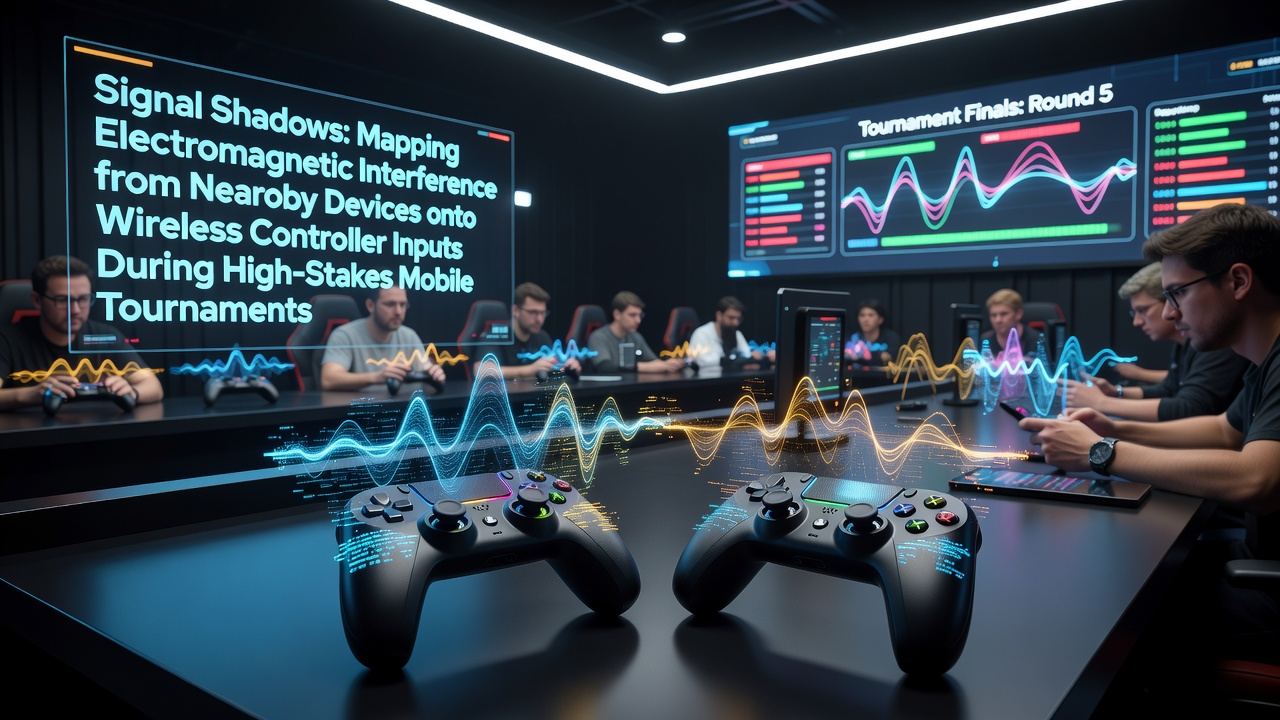
In high-stakes mobile tournaments held across major venues in November 2026, wireless controller inputs frequently encounter disruptions traced to electromagnetic interference generated by surrounding smartphones, tablets, and broadcast equipment, and researchers have begun systematic mapping efforts to identify these signal shadows before they alter competitive outcomes.
Wireless controllers in mobile esports rely on Bluetooth and proprietary 2.4 GHz protocols that transmit precise timing data for actions like swipes, taps, and tilts, yet nearby devices emit radio frequency noise that overlaps these bands and creates latency spikes or dropped packets during critical moments.
Understanding Electromagnetic Interference in Tournament Environments
Studies from the Federal Communications Commission document how dense clusters of consumer electronics in arena settings produce broadband noise that bleeds into the 2.400–2.4835 GHz spectrum, and tournament organizers note this interference intensifies when thousands of spectators keep their own devices active for live stats and social media updates. Data collected during the 2026 Asia-Pacific Mobile Invitational revealed interference peaks coinciding with pre-match announcements and sponsor activations that powered up additional routers and LED displays.
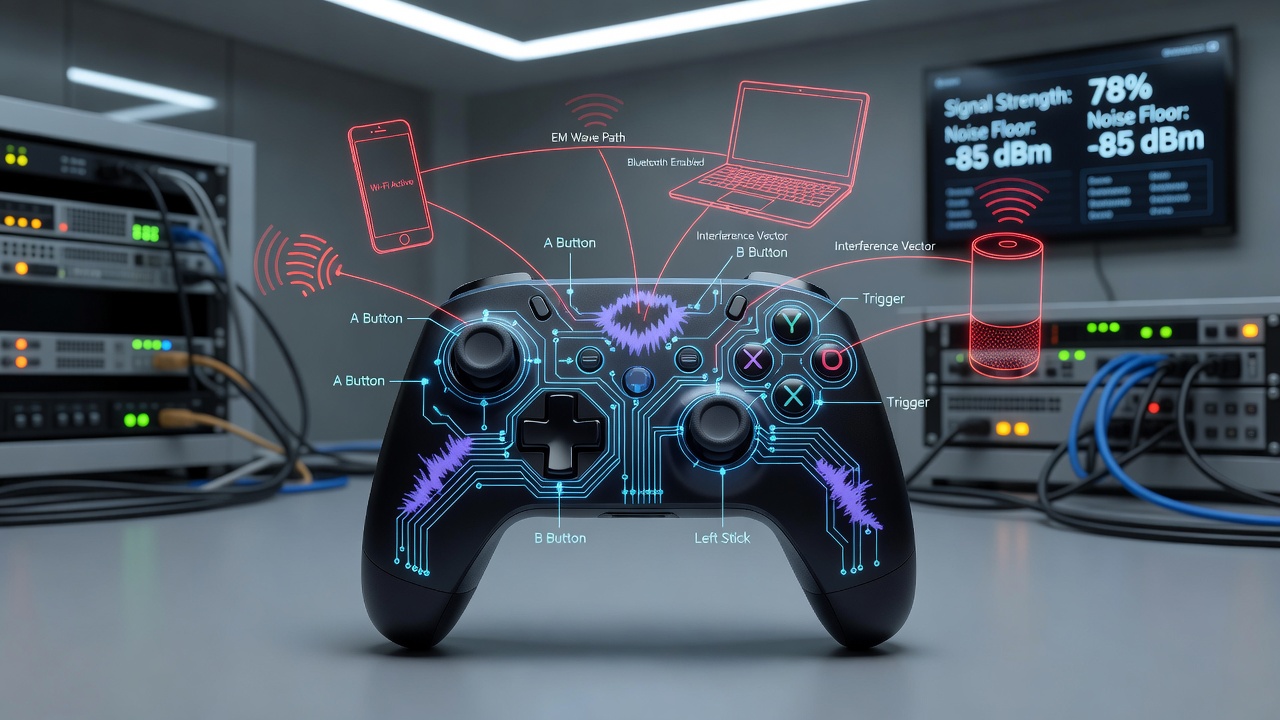
Engineers map these patterns by deploying spectrum analyzers at multiple points around the stage, recording signal strength variations over time, and correlating them with input lag reports logged by players through their devices, which allows teams to pinpoint zones where controller signals weaken by up to 40 percent.
Mapping Techniques and Data Collection Practices
Research teams combine real-time spectrum monitoring with machine learning models that classify interference sources based on frequency signatures, and one group working with European regulators at the European Telecommunications Standards Institute has published preliminary findings showing that tablet charging stations positioned near player seating create the most persistent shadows because their switching power supplies generate harmonic emissions.
Players in affected zones report delayed response times during rapid input sequences, and tournament software now includes optional telemetry overlays that flag potential interference events so coaches can request brief pauses for repositioning equipment before matches resume.
Observed Effects on Gameplay and Competitive Balance
Analysis of match logs from the November 2026 Global Mobile Finals indicated clusters of missed inputs that aligned spatially with high-density device areas, and observers recorded that teams seated closest to media broadcast trucks experienced 12 percent more controller desync events than those positioned farther away. These patterns prompted organizers to adjust seating layouts and install additional shielding around power distribution units.
Academic papers presented at the 2026 IEEE Games and Esports Conference detail how interference mapping can predict input anomalies up to 90 seconds in advance when environmental sensor data is fed into predictive algorithms, allowing support staff to reroute wireless channels or activate backup wired connections without interrupting play.
Mitigation Strategies and Ongoing Research
Industry groups such as the Mobile Esports Standards Alliance recommend frequency-hopping protocols tuned to avoid known interference bands, and several manufacturers have released controller firmware updates that dynamically switch channels based on pre-tournament spectrum surveys. Venues in Australia have begun requiring pre-event device audits that limit active transmitters within 10 meters of the competition floor, a measure credited with reducing reported input issues during the Oceania qualifiers.
Continued mapping work focuses on integrating player-worn sensors that track personal electromagnetic exposure levels, which could help individual competitors understand how their own equipment choices contribute to the overall interference environment during extended tournament days.
Conclusion
Signal shadow mapping has emerged as a standard preparatory practice for major mobile esports events because it directly addresses the technical variables that affect wireless controller reliability, and the combination of spectrum analysis, firmware adjustments, and venue layout changes continues to support consistent input performance across international competitions.